

How to Apply ISO Certification in Malaysia by Industry
January 2, 2026
How to Prepare for HACCP Audit & Avoid Costly HACCP Audit Mistakes
June 25, 2026
Safety is important in today’s competitive food industry as customers are more aware, regulations are tighter, and a single mistake can impact your entire business.
HACCP is a system that protects your operations from the ground up. By identifying potential hazards before they become problems, HACCP gives your business a framework to run safer, cleaner, and more confidently.
This article explores why HACCP is important for food businesses in Malaysia, how to apply, how long the certification process takes, and what it means for your future growth.
What is HACCP Malaysia Certification?
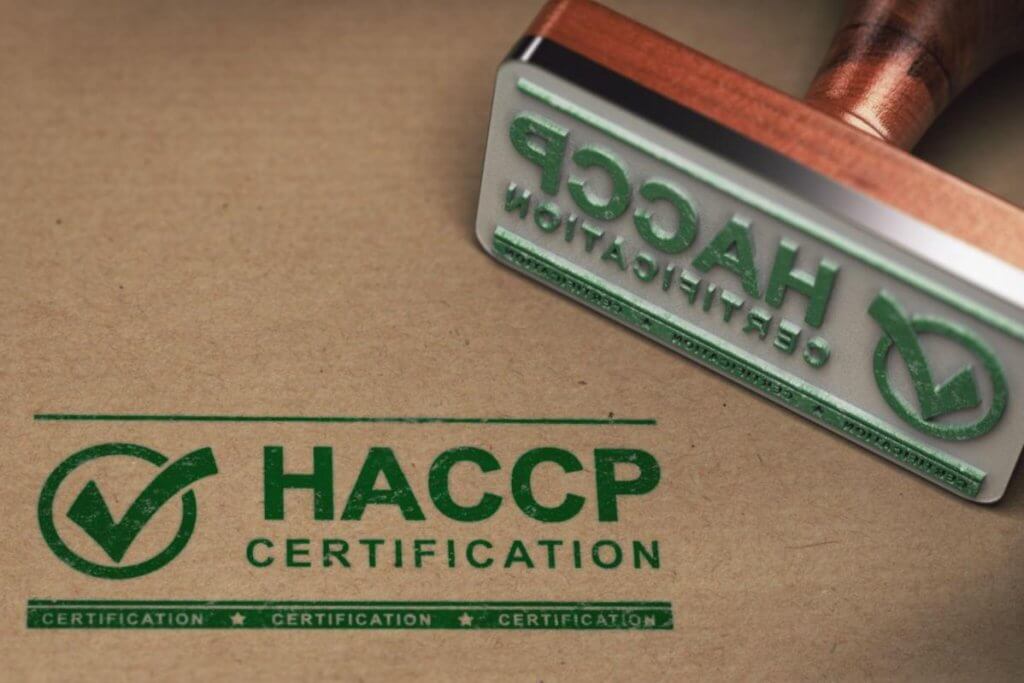
HACCP (Hazard Analysis Critical Control Point) is a globally recognised system for getting food safety certification that helps ensure your food products are safe for customers.
It identifies and controls risks, such as bacteria, chemicals, and other hazards, at every stage—from handling raw ingredients to delivering the final product.
Using HACCP shows regulators, customers, and the public that your food safety practices are reliable and well-managed, helping to build trust in your business.
8 Benefits of HACCP Certification
Getting HACCP certification is important for small businesses in Malaysia. It shows your commitment to food safety and assures customers and partners that your business is reliable.
- Builds Customer Trust: Consistent product quality leads to happier and more loyal customers.
- Ensures HACCP Food Safety Control: Implements effective systems to ensure safe food production.
- Meets Regulations: Complies with both local and international food safety standards.
- Aligns with ISO 22000: Integrate HACCP with ISO 22000 Malaysia for comprehensive safety measures.
- Provides Legal Protection: Reduces the risk of fines, penalties, and legal issues related to food safety violations.
- Improves Operations: Streamlines processes, reduces risks, and ensures smooth operations with clear safety guidelines.
- Reduces Costs: Minimises waste, product recalls, and rework by maintaining high-quality standards.
- Enhances Supply Chain Value: Strengthens your supply chain by ensuring consistent hazard controls and robust food safety practices.
- Competitive Advantage: Sets your business apart in a crowded market by showcasing your commitment to food safety.
HACCP certification helps you build trust, stay compliant, and run a safer, more efficient food business.
Who Needs HACCP Certification in Malaysia?
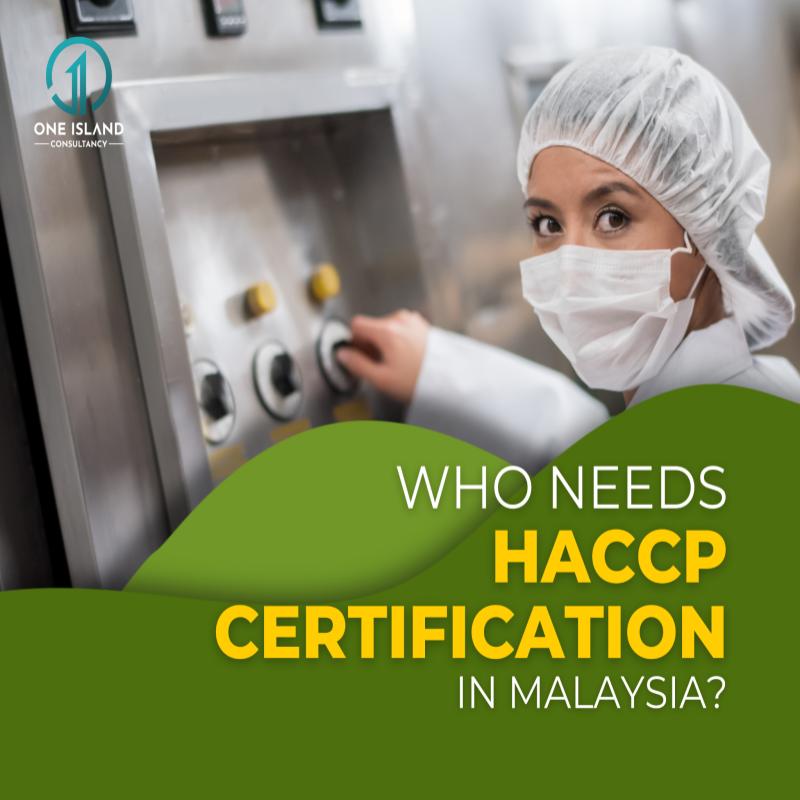
Although HACCP certification is not legally required for all businesses, it is highly valuable for showing your commitment to food safety. Here’s a simple guide to which industries benefit the most:
| Type of Business | Why is HACCP Certification Important |
| Food Manufacturers | Ensure food safety during large-scale production and build trust with customers and partners. |
| Food Processors | Control risks during food processing to prevent contamination and ensure product quality. |
| Packages | Ensure packaged food is safe and meets quality standards before reaching consumers. |
| Food Distributors | Help maintain food safety during transportation and storage, reducing risks of spoilage or contamination. |
| Food Service Providers | Ensure safe food handling and preparation in restaurants, catering, and food delivery services. |
Both new and established food businesses benefit from:
- Increased Customer Confidence: Shows your dedication to safety and quality
- Streamlined Operations: Improves processes and reduces risks
- Higher Profitability: Avoids costly recalls and builds a trustworthy brand
Investing in HACCP certification helps your food business succeed and stay ahead of the competition.
Find out more details about HACCP certification in Malaysia.
How to Check HACCP Certification in Malaysia
Ensuring that a business holds a valid HACCP certification is crucial for maintaining food safety compliance with Malaysian law, safeguarding against fraudulent certifications that may lead to legal issues, and building trust with customers, suppliers, and international trade partners.
Here’s a step-by-step guide on how to check HACCP certification in Malaysia:
| Steps | Details |
| Step 1: Visit the Official Regulatory Websites | Check HACCP certification through Food Safety and Quality Division (FSQD), Ministry of Health Malaysia or Department of Standards Malaysia (DSM). |
| Step 2: Search for the HACCP Certificate Number or Business Name | – If you have the certificate number, enter it into the official database. – If you don’t, search using the business name to verify its certification status. |
| Step 3: Verify the Certification Body | Confirm that the certificate was issued by a MOH-recognised certification body, such as: – SIRIM QAS International – SGS Malaysia – Bureau Veritas Malaysia – Intertek Malaysia – Lloyd’s Register Malaysia |
| Step 4: Check Certification Validity and Expiry Date | – HACCP certificates are valid for 3 years with annual surveillance audits. – Ensure the certificate is still active and compliant with current standards. |
| Step 5: Identify Signs of a Fraudulent Certification | Look out for red flags such as: – No record found on FSQD or certification body websites. – Missing certification number or incorrect details. – Fake seals or unauthorised certification bodies. – No official audit report accompanying the certificate. |
| Step 6: Contact Certification Consultant for Assistance | – Certification consultants like One Island help businesses verify HACCP certification legitimacy. – Assistance with renewals, compliance updates, and transitioning to HACCP MS 1480:2019. – Consulting on missing documentation or audit preparation. |
How to Long to Have HACCP Certification
The timeline for obtaining HACCP certification in Malaysia depends on your current level of compliance, business size, and how prepared your team is with documentation and internal processes.
| Stage | Estimated Duration |
| Initial Gap Assessment & Planning | 1 – 2 weeks |
| HACCP Plan Development & SOP Preparation | 2 – 4 weeks |
| Implementation & Staff Training | 2 – 4 weeks |
| Internal Audit & Pre-Certification Review | 1 – 2 weeks |
| Application & Certification Audit (by Certification Body) | 2 – 4 weeks |
| Total Estimated Time | 2 to 3 months (average) |
Smaller businesses with simpler operations may complete the process in as little as 6–8 weeks, while larger manufacturers or multi-site facilities may take up to 3–4 months to fully comply.
Getting certified takes time but it’s a strategic investment that pays off through improved safety, stronger brand reputation, and better access to high-value markets.
How to Apply for HACCP Certification?

The HACCP certification process in Malaysia involves several key steps, from understanding regulatory requirements to final certification audits.
Here’s a step-by-step breakdown of how businesses can achieve HACCP certification.
| Steps | Details | Required Documents |
| Step 1: Understanding HACCP Requirements | – Learn about HACCP MS 1480:2019 standards and Ministry of Health Malaysia (MOH) regulations. – Ensure compliance with Good Manufacturing Practices (GMP) and food hygiene laws. – Identify the scope of HACCP certification based on business operations (e.g., food processing, packaging, or handling). Tip: Study HACCP case studies and industry-specific regulations to understand key requirements for your sector. | Not required |
| Step 2: Implementing the HACCP System | Apply the 7 HACCP Principles: 1. Hazard Analysis – Identify biological, chemical, and physical hazards. 2. Critical Control Points (CCPs) – Determine points in production where hazards can be controlled. 3. Establish Critical Limits – Define safety limits (e.g., temperature, pH levels). 4. Monitor CCPs – Implement tracking procedures for compliance. 5. Establish Corrective Actions – Plan responses to deviations. 6. Verify HACCP System – Conduct audits and testing. 7. Maintain Documentation & Records – Keep food safety logs for regulatory compliance. Tip: Create a flowchart of your production process to clearly visualise hazards and control points. | – HACCP Plan – Hazard Analysis, Critical Limits, Corrective Actions. – Process Flowchart – Visual representation of food production stages. – SOPs (Standard Operating Procedures) for food handling and hygiene. – Food Safety Records– Monitoring logs, temperature records, and cleaning schedules. |
| Step 3: Preparing for the HACCP Audit | – Conduct internal audits to check compliance with HACCP guidelines. – Review HACCP documentation, SOPs (Standard Operating Procedures), and food safety records. – Train employees on food handling procedures and corrective actions. – Address non-compliance issues before the official audit. | – Internal Audit Reports– Records of pre-certification audits. – Employee Training Records – Proof of HACCP and food safety training. – Corrective Action Reports – Addressing previous non-compliance issues. |
| Step 4: Check Certification Validity and Expiry Date | – Choose an MOH-recognised HACCP certification body. – Submit the HACCP application along with the required documents. – Undergo a Stage 1 Audit (document review) and Stage 2 Audit (on-site facility inspection). – Address any audit findings before final certification approval. Tip: Ensure your HACCP plan is customised for your business operations—generic templates may not meet certification standards. | – HACCP Plan (Fully Developed & Implemented) – Process Flowchart & Risk Assessment Report – GMP Compliance Report – Food Safety Policy Statement – List of Critical Control Points (CCPs) & Monitoring Records – Product Description & Ingredients List – Supplier & Raw Material Verification Records – Sanitation & Hygiene Procedures (SOPs) – Employee Training Records (HACCP & Food Safety) – Internal Audit Reports & Corrective Action Records – Application Form & Fee Payment Receipt |
| Step 5: Identify Signs of a Fraudulent Certification | – Maintain HACCP records and conduct regular internal food safety audits. – Update SOPs and hazard control measures as per regulatory changes. – Undergo annual surveillance audits to retain HACCP certification validity. – Renew HACCP certification every 3 years before expiry. Tip: Set up automatic reminders for HACCP renewal and audits to prevent last-minute compliance issues. | – Annual Surveillance Audit Reports – Updated HACCP Plan (if necessary) – Renewal Application Form & Fee Payment Receipt |
How One Island Consultancy Can Help You
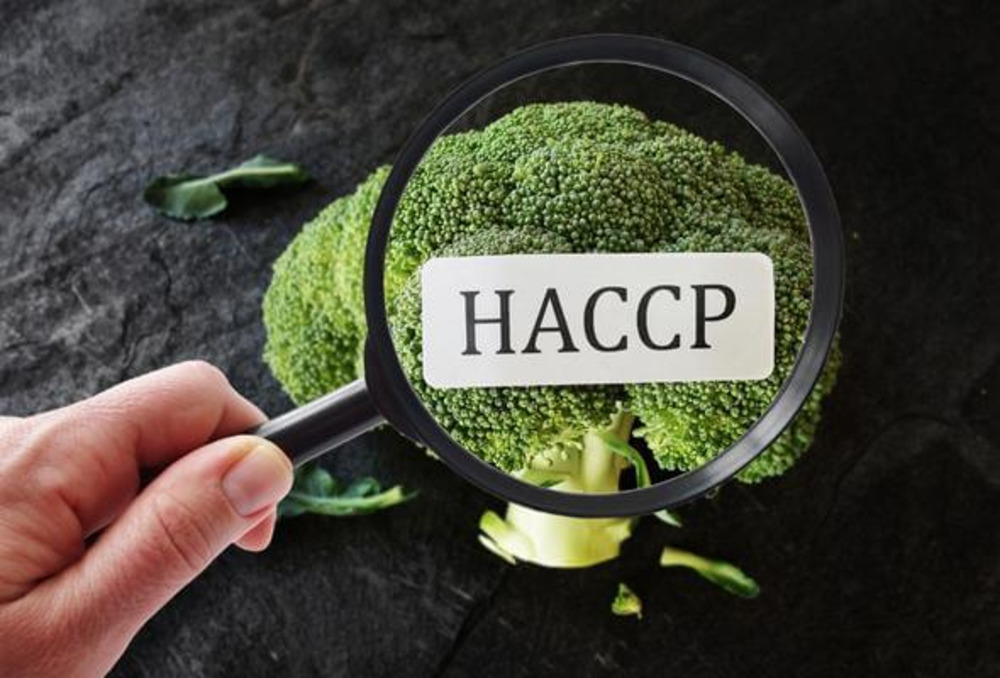
One Island Consultancy simplifies the process for businesses by providing end-to-end consultation and support to help you achieve HACCP certification.
With a team of food safety experts and regulatory specialists, we ensure businesses meet HACCP MS 1480:2019 standards while streamlining the certification process.
- Gap Analysis & Consultation
We start with a full assessment of your operations, identifying gaps in hygiene, food handling, and documentation. Then, we provide a clear roadmap to meet HACCP standards.
- HACCP Plan & Documentation
Next, we help develop a customised HACCP plan complete with hazard analysis, CCPs, process flowcharts, SOPs, and supplier verification records.
- On-Site Implementation & Training
Your team gets hands-on training to understand HACCP principles, monitoring, and corrective actions, with systems put in place to manage food safety consistently.
- Mock Audits & Compliance Checks
Before the real audit, we conduct internal reviews, check food safety records, and ensure your team is fully prepared.
- Certification Support
We handle the application, coordinate with recognised certification bodies, and offer on-site support during audits for a smooth approval process.
- Ongoing Support & Renewal
After certification, we help you stay compliant through annual audits, regulatory updates, and timely renewals for ISO 9001 Malaysia, HACCP, ISO 22000:2018, and GMP certification and training
ABC Food Corporation Achieved HACCP Certification with Expert Guidance
ABC Food Corporation, a mid-sized Malaysian manufacturer of ready-to-eat meals and frozen food, set out to improve food safety and expand into international markets. To meet global standards and comply with Malaysia’s stringent food safety regulations, the company aimed to achieve HACCP (Hazard Analysis and Critical Control Point) certification.
Despite its growth and success, ABC faced multiple challenges in implementing a structured food safety system across its operations—ranging from inconsistent production practices to a lack of internal expertise on HACCP requirements.
Challenges
- Inconsistent Food Safety Practices: Lack of standardised procedures led to variation in quality and potential contamination risks.
- Regulatory Compliance: The company struggled to meet complex HACCP criteria required for both local and international food export regulations.
- Staff Awareness & Training: Many employees were unfamiliar with HACCP principles and the role of Critical Control Points (CCPs).
- Documentation Gaps: Ineffective record-keeping made traceability and monitoring difficult.
One Island’s Solution
- HACCP Plan Development
a) One Island worked closely with ABC’s team to conduct a hazard analysis and identify CCPs throughout the production process.
b) A customised HACCP plan was implemented with clearly defined control measures and corrective actions.
- Standardisation of Operations
Production processes were reviewed and aligned with HACCP best practices, ensuring uniform safety protocols across all departments.
- Staff Training & Awareness
One Island conducted targeted training sessions for employees on CCP monitoring, hygiene, and food handling based on HACCP standards.
- Documentation System Upgrade
A new system was introduced for recording CCP checks, cleaning schedules, and corrective actions, supporting audit readiness and compliance.
- Internal Audits & Compliance Monitoring
Regular mock audits helped ABC identify and correct issues early, improving readiness for the final HACCP certification audit.
Results & Business Impact
- Successfully Achieved HACCP Certification: ABC passed the third-party audit and received HACCP certification, validating its food safety system.
- Improved Product Quality & Safety: Implementation of the HACCP plan led to a significant reduction in contamination risks and product defects.
- Increased Market Access & Consumer Trust: Certification enhanced ABC’s reputation, enabling them to expand into international markets and secure new clients.
- Operational Efficiency: The standardised procedures and improved documentation helped reduce waste and improve production flow.
Secure Your Food Business Future—Get HACCP Certified Today
Getting HACCP certified shows your commitment to food safety and helps your business grow. It builds customer trust, improves operations, and ensures you meet safety standards.
Ready to get HACCP certification in Malaysia? Contact One Island Consultancy for expert guidance and support. We’re here to help your food business achieve the highest safety standards!