

Why GDPMD is Essential for Medical Device Safety in Malaysia
January 2, 2026
How to Apply GDPMD License in Malaysia: Step-by-Step Guide for Medical Industry Compliance
January 2, 2026
Malaysia plays a significant role in the global halal industry, with its certification standards widely recognised. Having halal certification can help businesses tap into a growing market and build trust among Muslim consumers.
The process of getting halal certification can be complex for businesses seeking compliance with JAKIM’s strict guidelines, which require proper planning and documentation.
This guide will help you get started by explaining halal certification requirements in Malaysia, required documents, costs, and a step-by-step process.
What is Halal Certification?
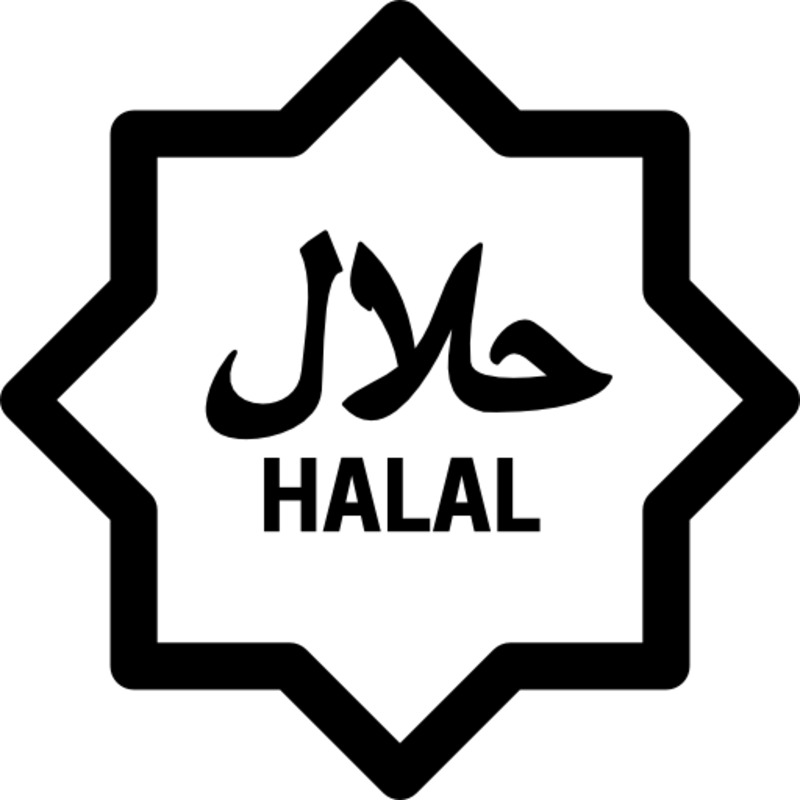
Halal certification is an official recognition that a product, service, or business meets Islamic dietary and quality standards set by JAKIM and other recognised halal authorities. It ensures that ingredients, preparation, and handling comply with Shariah (Islamic law), including the prohibition of pork, alcohol, and cross-contamination.
This certification also applies to food & beverage, food premise, medical devices, cosmetics, pharmaceuticals, logistics, and manufacturing, ensuring ethical sourcing and production. A valid certificate allows businesses to display the official halal logo, giving consumers confidence in its compliance.
In Malaysia, JAKIM’s halal certification is globally recognised, making it essential for businesses looking to expand into Muslim-majority markets or cater to halal-conscious consumers.
5 Benefits of Having Halal Certification for Your Business
With a strong reputation in the halal industry, Malaysia offers businesses significant advantages through halal certification.
1. Builds Consumer Trust & Credibility
Halal certification assures Muslim consumers that products meet Islamic dietary and ethical standards. With over 60% of Malaysians identifying as Muslim, having a halal certificate enhances brand credibility and boosts consumer confidence.
2. Expands Business Opportunities
Certified businesses can tap into Malaysia’s halal market and expand into Southeast Asia, the Middle East, and Europe, where demand for halal products is growing. It also creates opportunities to collaborate with halal-compliant suppliers, retailers, and distributors.
3. Competitive Edge Over Non-Certified Brands
With the growing demand for halal products, businesses with halal certification stand out from competitors who are not certified. It gives brands a stronger market position, builds consumer confidence, and increases trust among Muslim and non-Muslim customers who value high production standards.
4. Strengthens Global Recognition
Malaysia’s JAKIM halal certification is one of the most trusted worldwide, making it essential for businesses looking to export to Muslim-majority countries. Compliance with international halal standards also improves marketability in global trade.
5. Meets Food Safety & Hygiene Standards
Halal certification ensures businesses adhere to strict hygiene, food safety, and ethical sourcing guidelines. This reduces the risk of contamination, enhances quality assurance, and increases trust among both Muslim and non-Muslim consumers.
Who Issues Halal Certification in Malaysia?

Official authorities regulate Halal certification in Malaysia to ensure compliance with Shariah law and national halal standards.
The certification process follows strict halal certification guidelines to guarantee that products, services, and businesses meet halal requirements. Here are the three main authorities responsible for issuing halal certification in Malaysia.
| Authority | Roles & Responsibilities |
| JAKIM (Department of Islamic Development Malaysia) | The main governing body overseeing halal certification in Malaysia. It sets national halal standards (MS1500:2019), manages the MYeHALAL system for applications, and ensures Malaysia’s halal certification is globally recognised. |
| State Islamic Religious Councils (MAIN or JAIN) | These state-level councils provide halal certification for local businesses, restaurants, and food premises. They operate under JAKIM’s supervision and follow its halal compliance guidelines. |
| Internationally Recognised Halal Certification Bodies | JAKIM approves foreign halal certification bodies for imported halal products. To maintain compliance, businesses importing goods must ensure their certifier is on JAKIM’s official list. |
How to Verify a Halal Certificate in Malaysia

Ensuring that a product or business is truly halal-certified is essential for consumers and businesses.
In Malaysia, halal verification can be done through official channels to confirm the authenticity of a JAKIM-issued halal certificate and prevent fraudulent claims.
| Verification Method | How it Works |
| Check via JAKIM’s Halal Malaysia Portal | Visit JAKIM’s Halal Malaysia Portal to search for certified products, businesses, and manufacturers using the halal registration number or company name. |
| Look for the Official JAKIM Halal Logo | Ensure the product or business displays the official JAKIM halal logo, which features the word “HALAL” in Arabic with JAKIM’s name below it. Be cautious of altered or unofficial logos. |
| Verify Through the MYeHALAL System | Businesses can cross-check the validity of halal certificates via MYeHALAL, JAKIM’s official certification system, to confirm supplier and imported product compliance. |
| Report Suspicious or Fake Halal Claims | Report fraudulent halal claims to JAKIM or the Ministry of Domestic Trade and Consumer Affairs (KPDNHEP) via their hotline, official website, consumer complaint portal (Aduan), or social media channels. |
5 Steps in the Halal Certification Process in Malaysia

Getting a Halal certificate in Malaysia involves a structured process to ensure compliance with JAKIM’s halal standards. Businesses must meet eligibility requirements, submit the necessary documentation, undergo an audit, and receive approval before being certified.
| Step | Details | Key Actions |
| Check Eligibility Requirements | Ensure compliance with JAKIM’s halal certification standards (MS1500:2019). | – Products, ingredients, and processes must be free from non-halal substances such as pork and alcohol. – Business must follow Islamic dietary laws and hygiene standards. |
| Prepare and Submit Required Documents | Apply through the MYeHALAL system and submit necessary halal certification documents. | – Company Registration Documents (SSM certificate, business license). – Product List & Ingredient Details (including supplier halal certificates). – Manufacturing Flow Chart & SOPs. – Halal Assurance System (HAS) Manual. – Employee details for halal compliance. |
| Undergo Halal Audit & Inspection | JAKIM conducts an on-site inspection to verify compliance. | – Ingredient verification to ensure all sources are halal-certified. – Facility assessment to prevent cross-contamination. – Employee training & compliance checks. |
| Receive Approval & Halal Certificate | JAKIM reviews the application and issues the official halal certificate. | – Business is now halal-certified and can display the official JAKIM halal logo. |
| Maintain Compliance & Renew Certification | Halal certification requires periodic renewal and continued compliance. | – Update product lists & supplier certifications. – Conduct internal halal audits. – Ensure continuous staff training on halal compliance. |
8 Key Halal Certification Requirements in Malaysia for Your Business
The halal certification requirements in Malaysia are set by the Department of Islamic Development Malaysia (JAKIM). To obtain halal certification for your business, the following requirements need to be met:
1. Ingredient Verification
All ingredients used in the product must be halal, with no traces of prohibited (haram) substances, such as alcohol or pork-derived ingredients.
Detailed documentation of each ingredient’s source and certification is required.
2. Facility Compliance
The manufacturing or processing facility must comply with halal standards. This includes maintaining cleanliness, segregation of halal and non-halal products, and ensuring the proper handling of ingredients.
Facilities must also have halal practices in place, including the use of halal equipment and utensils.
3. Employee Training
Staff members should be adequately trained on halal requirements, including how to handle halal ingredients, products, and tools to avoid contamination with non-halal items.
Halal training sessions should be documented, and the company must demonstrate ongoing employee awareness.
4. Halal Assurance System (HAS) Manual
A Halal Assurance System (HAS) must be developed and maintained. This manual outlines all procedures to ensure compliance with halal standards and must be regularly reviewed and updated.
The manual should include guidelines on ingredient sourcing, product handling, and facility hygiene.
5. Halal Audit
A halal audit will be conducted by JAKIM or its authorised body to ensure all halal requirements are met. This involves an inspection of the facility, processes, and documentation.
Regular audits may be required to maintain halal certification.
6. Document Preparation and Submission
Businesses must submit the necessary documentation, including:
- Completed application forms
- Ingredient and supplier certifications
- Food safety management systems (e.g., HACCP, GMP)
- Employee training records
All documents must be accurate, complete, and properly signed.
Learn more about GMP certification and HACCP certification in Malaysia that enhance product safety, hygiene, and compliance with halal requirements.
7. Certification Fee
A fee is charged for the halal certification process. The amount may vary based on the type of halal schemes and size of the operation.
8. Annual Renewal
Halal certification is typically valid for a period of two or three years, after which businesses must apply for renewal by submitting updated documents and undergoing another audit.
By adhering to these requirements, businesses can successfully obtain and maintain halal certification in Malaysia, ensuring compliance with Islamic law while expanding into halal markets.
Get Halal Certified Without Hassle with One Island Consultancy
One Island Consultancy provides end-to-end support to help businesses obtain their halal certificate in Malaysia smoothly and efficiently.
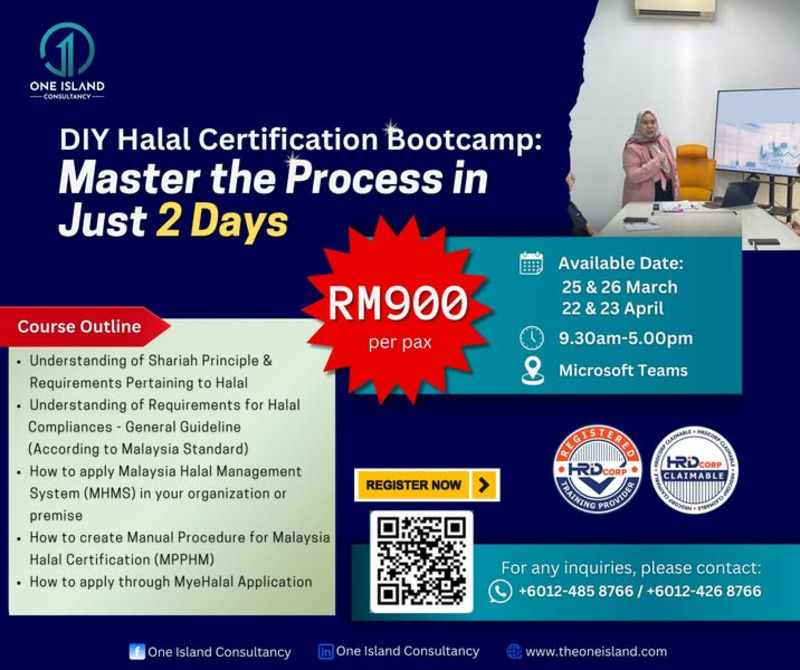
From documentation preparation to halal awareness training and pre-audit assessments, our team ensures businesses meet all halal certification requirements with minimal hassle.
| Service | What We Do | How it Helps Your Business |
| Pre-Assessment & Feasibility Study | – Analyse business eligibility for halal certification. – Identify compliance gaps in ingredient sourcing, handling, and production. – Provide recommendations to meet JAKIM’s halal standards (MS1500:2019). | – Ensures your business is ready for halal certification before applying. – Avoids costly delays caused by non-compliance. – Saves time by highlighting necessary adjustments early. |
| Documentation & Compliance Support | – Application consultants handle the MYeHALAL submission process. – Halal documentation experts prepare the Halal Assurance System (HAS) Manual & SOPs. – Ingredient & supplier verification specialists ensure all raw materials meet JAKIM’s halal requirements. | – Prevents application rejection due to missing or incorrect documents. – Ensures all documentation meets JAKIM’s strict requirements. – Provides a smooth and hassle-free certification process. |
| Halal Awareness Training for Employees | – Certified halal trainers conduct staff training on halal food handling, hygiene, and ingredient compliance. – Special workshops for production managers and chefs. – Covers halal labelling, storage, and facility requirements. | – Ensures employees understand and follow halal compliance standards. – Reduces the risk of non-compliance during inspections. – Helps businesses maintain long-term halal certification. |
| Pre-Audit & JAKIM Inspection Readiness | – Mock audits and internal assessments to detect compliance gaps. – Facility compliance consultants ensure proper equipment segregation and halal-friendly processes. – Audit support specialists prepare businesses for JAKIM’s official inspection. | – Increases chances of passing JAKIM’s halal audit on the first attempt. – Reduces inspection failures due to unprepared facilities or documentation. – Avoids costly re-audits and certification delays. |
| Post-Certification Support & Renewal Assistance | – Monitor certification validity and handle renewal applications. – Conduct regular compliance audits to ensure continued adherence to JAKIM’s standards. – Troubleshoot non-compliance issues before they become a problem. | – Prevents halal certification from expiring and affecting business operations. – Ensures smooth renewal process with no delays. – Provides continued guidance for long-term halal compliance. |
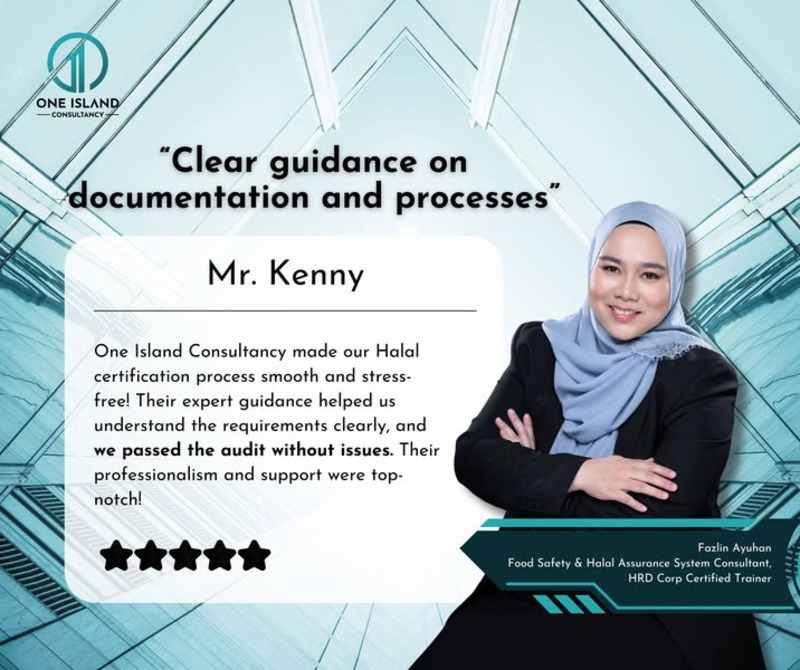
With a team of experienced halal consultants, we provide comprehensive support for businesses at every stage of the certification process. From pre-application assessment to halal training and post-certification maintenance, our services help businesses achieve JAKIM halal certification efficiently and with full compliance.
Malaysian Food Manufacturing Business Achieves Halal Certification with Expert Guidance
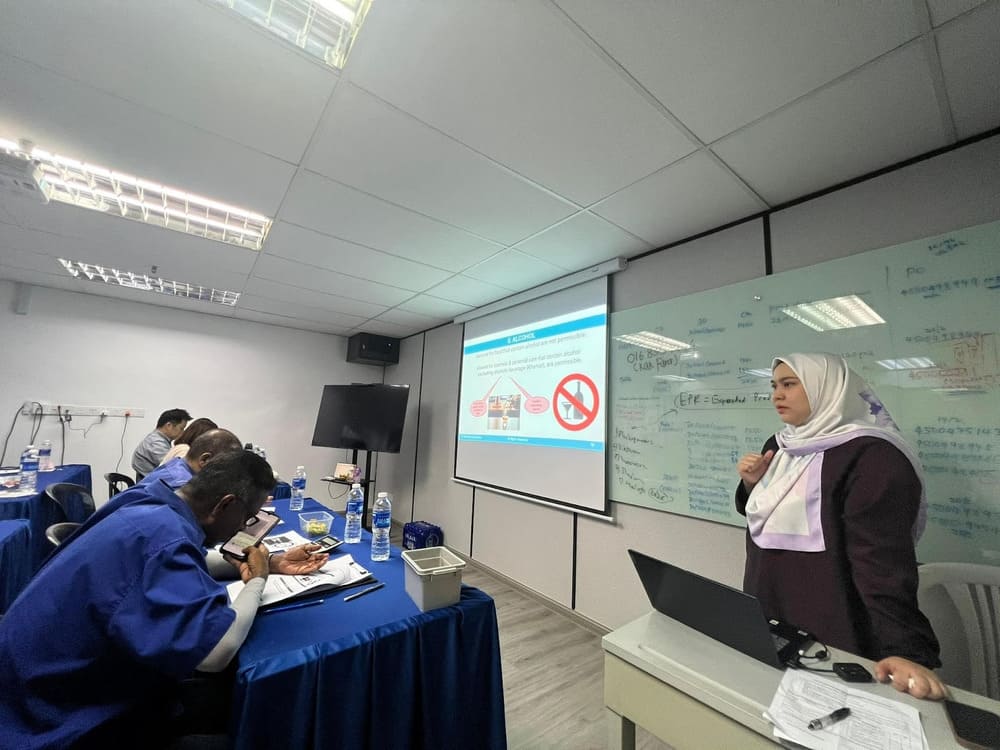
XYZ Food Corporation is a well-established food manufacturer in Malaysia that specializes in producing ready-to-eat meals, snacks, and beverages. With an expanding international customer base and a growing demand for certified halal products, the company realized the necessity of obtaining JAKIM halal certification for their products. The goal was to cater to the significant Muslim market, build trust with consumers, and enhance product credibility in local and global markets.
Challenges
While XYZ Food Corporation had a strong reputation for quality, it did not possess the JAKIM halal certification. This created several challenges:
- Market Access Limitations: Many Muslim-majority countries, especially in the Middle East and Southeast Asia, require halal certification for food products, which limited market expansion opportunities.
- Consumer Confidence: Muslim consumers often prioritize halal-certified products as they guarantee adherence to Islamic dietary laws, impacting the company’s ability to build consumer trust.
- Compliance Complexity: The process of obtaining halal certification, especially JAKIM certification, was complex. It involved stringent adherence to halal food preparation standards, sourcing, and manufacturing processes, which the company had to comply with to pass the audit.
Solution
XYZ Food Corporation decided to take proactive steps toward obtaining JAKIM halal certification to address these challenges. The company took the following actions:
- Engaged Halal Certification Consultants: To navigate the certification process, XYZ Food hired a halal consultant with expertise in JAKIM certification. The consultant helped the company understand the specific requirements and standards that had to be met.
- Internal Process Review and Upgrades: The company reviewed and adjusted its entire supply chain to ensure compliance with JAKIM standards. This included sourcing halal-certified raw materials, ensuring clean and segregated production areas, and implementing halal-specific hygiene practices.
- Training for Employees: XYZ Food Corporation provided comprehensive training to its staff regarding halal requirements, including the importance of proper handling, storage, and production practices to avoid contamination with non-halal substances.
- Engagement with JAKIM: The company submitted all necessary documents, including detailed production processes, ingredient lists, and raw material sources, to JAKIM for review. They also facilitated an on-site audit by JAKIM to ensure full compliance.
Outcome
After a thorough review and on-site inspection by JAKIM, XYZ Food Corporation successfully received the JAKIM halal certification for their products. The outcome included:
- Market Expansion: The certification opened up new markets in Muslim-majority countries, particularly in the Middle East and Southeast Asia. The company was able to supply their halal-certified products to international retailers and food distributors.
- Increased Consumer Trust: The halal certification provided consumers with the assurance that XYZ Food Corporation’s products adhered to Islamic dietary laws, which helped boost sales within the local Malaysian market as well as internationally.
- Improved Operational Standards: The company’s internal processes were strengthened, ensuring better traceability and quality control of raw materials and finished products.
- Brand Recognition: The JAKIM halal logo added credibility to XYZ Food’s brand, giving it a competitive edge in the increasingly competitive food industry.
Get Halal Certified with One Island’s Training and Consultation
Halal certification in Malaysia is a valuable asset that helps businesses build consumer trust, expand into halal markets, and strengthen brand credibility. Obtaining JAKIM’s halal certification ensures businesses meet strict halal standards while improving operational efficiency.
The certification process can be complex, requiring proper documentation, ingredient verification, facility audits, and employee training.
This is where One Island Consultancy comes in. With end-to-end support, we help businesses navigate JAKIM’s requirements, prepare essential documents, conduct halal training, and ensure a smooth audit process.
Looking for a trusted ISO training provider to help your business achieve Halal certification? Get in touch with us today and start your compliance journey with confidence!